Wildlife Information
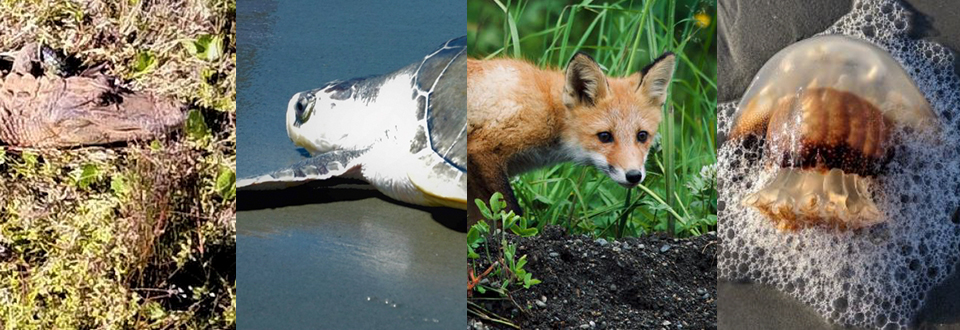
With a diverse ecosystem of wooded forests, swamps, coastal marshes, and sandy beaches, there is no shortage of wildlife to be found in the Cape Fear region! In fact, there are hundreds, if not thousands of species of birds, fish, reptiles, amphibians, insects, and arachnids that call Oak Island home.
While it would be fascinating to learn about all of them, this page is dedicated to some of the more visible wildlife you may be surprised to encounter as a temporary visitor or resident.
While it can be awe-inspiring and even a bit frightening to see some of these animals for the first time, it's important to remember that they just want to relax and enjoy life just like you! So, if you come across any of the species listed below, it is best to observe and admire them from afar, and please just let them be!
Learn about the Wildlife Seen in Oak Island
Sea Turtles
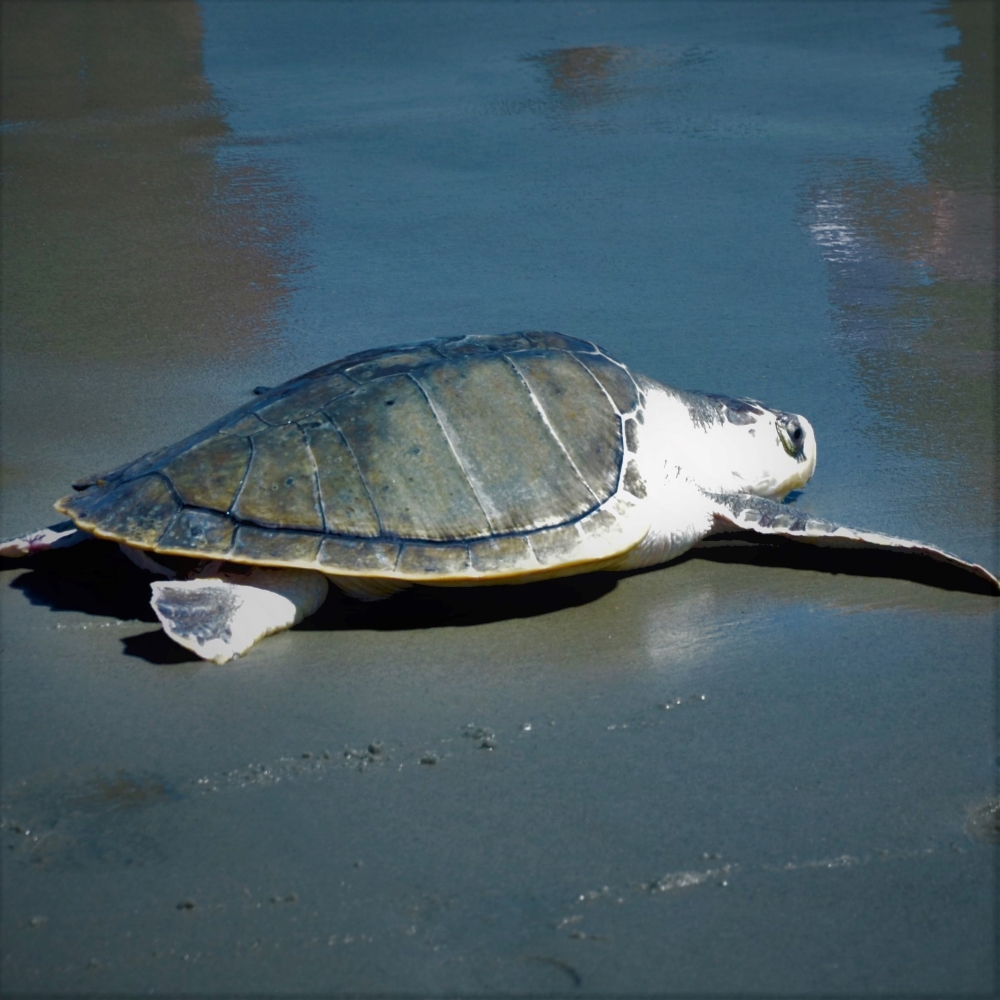 Sea turtles are one of the most famous species of wildlife to regularly see in Oak Island. The official Sea Turtle Nesting & Hatching season occurs annually between May 1 - November 15, when female turtles come ashore to dig nests and lay their eggs in the protected dune areas.
Note: this is why Beach Bonfires are not permitted during these months, and just one more reason why you should not walk on the dunes.
Depending on what time of the season someone visits the beach, it is possible to see either a mother turtle burying her eggs, or a group of new hatchlings making their famous march to the sea!
Loggerhead turtles are the species most commonly seen on Oak Island, but Green and Leatherback nests can occasionally be found as well.
Important: Sea turtles are a federally protected species. Do not try to harm, touch, feed, or disturb their nesting process in any way, as this could lead to severe legal penalty.
Sea Turtle Protection Program
If you encounter a sea turtle, or a nest that has not been identified and marked, please contact the Oak Island Sea Turtle Protection Program (OISTPP) immediately. OISTPP is an all-volunteer 501(c)(3) nonprofit environmental and conservation organization, whose mission is to monitor and protect the local sea turtle population. They are the only local group authorized by the North Carolina Wildlife Resources Commission (NCWRC) to conduct monitoring and protection activities in the Town of Oak Island.
To contact OISTPP, call 910-945-8888, or use the OISTPP Contact Form.
How to help the Sea Turtle population:
- Do not use bright, white flashlights on the beach at night
- This can confuse turtles who us the moon to navigate
- Keep ocean-facing windows covered
- Again, to avoid misdirection from artificial light sources
- DO NOT have bonfires or use lighted grills at night
- This can causing a distracting light source, and if left unattended, can injure turtles
- Do not dig deep holes and fill in all holes before leaving the beach
- Just like the danger posed to humans, turtles can fall in holes and become injured or trapped
- Knock down all sand castles before leaving the beach
- These can block the turtles from reaching their ideal nesting areas, causing them to nest in poor conditions and greatly reducing the chance of hatchling survival
- Remove all beach equipment by the end of the day.
- Similar to sand castles, these can cause obstructions, so as the motto goes "Leave Only Footprints"
To learn more about the many species of turtles which call Oak Island home, just visit the Oak Island Ocean Education Center, located at 4700 E Oak Island Drive, across from the Town Hall.
Alligators
Important: In North Carolina, it is illegal to feed, touch, harm, harass, or poach an alligator. While they rarely pose a threat to humans, alligators can become a nuisance when humans intentionally (or unintentionally) feed them, which causes them to associate humans with an "easy meal."
 Some may find it surprising to learn that alligators do live in North Carolina. While North Carolina alligators are usually smaller than those found in states farther south, males can still reach up to 13' in length and weigh well in excess of 500 pounds. Females are generally a little less in size, around 10' in length, and weighing a few hundred pounds.
Despite their smaller size, they are still quite large and can be very dangerous if provoked.
Alligators inhabit freshwater swamps, marshes, ponds, lakes and the backwaters of large rivers. However, it is not uncommon to see them in brackish water or even on the beach! In Oak Island, it is possible to view them laying on the banks of the Davis Canal, in retention ponds, or backwater areas of the the Intracoastal Waterway.
Alligators in the Surf
Alligators are "the apex predator of the wetlands," but unlike states further south, in North Carolina they can experience cold winters. Since alligators are coldblooded and rely on their environment for temperature regulation, they enter a process called brumation, the reptilian equivalent of mammal hibernation.
After brumation usually in the early spring, it is not uncommon to see an alligator swimming in the ocean, or lying on the beach. This can happen for several reasons, but is usually because a tired or weakened alligator has been washed or pushed out of their home due to tides or heavy rains; with some theories suggesting they purposefully take a saltwater “bath” to remove freshwater parasites.
While alligators can tolerate salt water for a few hours or even days, they are primarily freshwater animals and don't prefer it. If you encounter an alligator in the ocean or on the beach, give it plenty of space and do not provoke or interact with it in any way, it will most likely return where it came from soon.
Should I be worried?
NO, but you should always be cautious and aware of your surroundings. Alligators are "ambush predators" and prefer prey they can eat in one bite. Basically, if you can see one lying around, then they are probably not hunting, but rather just getting some sun. The best action is to simply leave them alone, and give them plenty of space.
Remember: Oak Island is their home too! The Town will not remove an alligator simply for being present in a given area; wildlife are removed only if they pose a legitimate and immediate threat to humans. In most cases, their mere presence is not considered an immediate threat (yes, this even includes alligators).
If an alligator is showing unusual signs of aggression, disease, or other actions that appear threatening, please do not contact the Oak Island Police Department directly, instead call 9-1-1 so that the Brunswick County Sheriff's Office Animal Protective Services can be appropriately dispatched.
To learn more about the alligators which call Oak Island home, just visit the Oak Island Nature Center, located at 5202 E Yacht Drive, next to the Malcom Register Park.
Dolphins
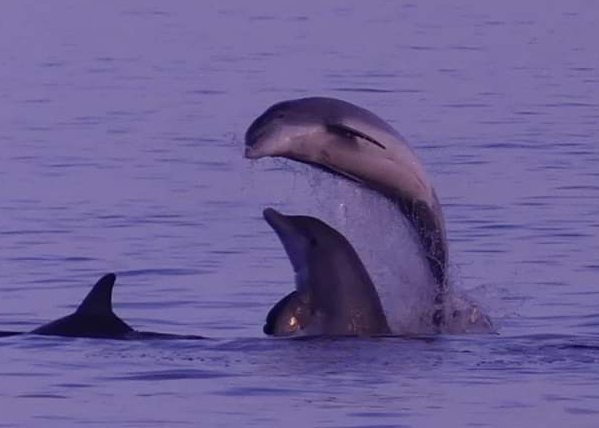 The Common Bottlenose Dolphin is often seen from the Oak Island Pier, or even the shoreline. By far the most widely distributed cetacean in the coastal waters off of North Carolina, it is the primary dolphin species most likely to be seen from shore.
They are even occasionally seen in the areas of the Intracoastal Waterway (ICW) on the Northern side of Oak Island. There are separate populations found inshore and offshore.
If taking a boat trip or fishing charter, once offshore it's very possible to see other species including:
- Clymene Dolphin
- Spinner Dolphin
- Atlantic Spotted Dolphin
- Orcas (Killer Whales)
- False Killer Whales
- Rough-toothed Dolphin
- Risso's Dolphin
Information from the North Carolina State Parks
Generally speaking, dolphins are very curious and social creatures. While this may be amusing or cute to observe, it is important to remember that these are wild animals, and should be respectfully viewed from a distance.
Please do not try to feed, handle, touch, swim, or interact with wild dolphins in any way!
Jellyfish / Man O' War
 While there are hundreds of species of jellyfish who pass by the waters of North Carolina daily, the most commonly seen in Oak Island are the Cannonball Jellyfish, and the (misidentified) Portuguese Man-of-War.
Cannonball Jellyfish (Stomolophus meleagris), sometimes called Cabbagehead Jellyfish or simply "Cannonballs," are the most prominent species of jellyfish on the southeastern coast of the United States. Their color ranges from a deep purple to white; and as the name suggests, they are about the size of a small cabbage. They are especially abundant during the fall and summer seasons.
Food for thought: Among other marine life, cannonballs are a favorite food source for the sea turtles who come to Oak Island for nesting. As they they are swept along by the same ocean currents that bring the sea turtles, it's not uncommon to see large groups of cannonballs washed up along the beach, preceding a rise in the number of turtle nests. Once washed onshore, seagulls, crabs and other beach scavengers make quick meals of them. When disturbed or threatened, the cannonball jellyfish can secrete a toxic mucus that will harm small fish, and drive away most predators. Although cannonball jellyfish are not known for stinging humans, the toxin from a cannonball can potentially cause cardiac problems in both humans or their pets. While not considered an immediate danger, it's best to not touch or handle them, and simply let nature facilitate their removal.
 The Portuguese Man O' War (Physalia physalis) is commonly mistaken for a jellyfish, but is in fact a siphonophore, which are a group of specialized animals called zooids that act together as a unit. This differs from actual jellyfish, which are a single animal.
The Man O' War gets its name from the resemblance to the 18th-century warship of the same, when at full sail. They are easily recognized by their unique balloon-like float, which comes in shades of purple, pink, or blue. Along with the float are strands of tentacles that can extend anywhere from 30-100' long. Get more information from the National Ocean Service.
The tentacles contain stinging nematocysts, which are microscopic capsules loaded with coiled, barbed tubes that deliver venom capable of paralyzing and killing small fish and crustaceans. While the man o’ war’s sting is rarely deadly to people, it packs a painful punch and causes welts on exposed skin. These can still sting for several weeks after washing ashore.
If you encounter a Man O' War in the ocean, calmly exit the area as soon as possible. If you encounter one lying on the beach, do not touch or handle it in any way, or let you pets interact with it.
Purple Flag Notice
 Please Note: As with any other beach in most oceans worldwide there are always Man O' War, sharks, jellyfish, and other potentially dangerous marine life the water. The rare possibility of encountering one of these must be accepted before swimming in the ocean.
In most cases, single sightings will not trigger a purple Beach Warning Flag(JPG, 200KB). Only when they have been observed in an unusually high concentration, very close to shore, or other unique circumstances will a purple flag be raised.
Before venturing out into the water, be sure to check the current Beach Warning Flag condition at www.OakIslandNC.gov/SAFETY.
Fish
 There are over 700 species of fish known to be found in the waters off the coast of North Carolina. Dozens of these can be caught right from the shores of Oak Island, or at least 800' out over the water on the Oak Island Pier.
Popular species often found in the area include flounder, trout, bass, spots, and king mackerel; with the Oak Island Pier being particularly known for trophy king mackerel fishing, and home of the annual U.S. Open King Mackerel Tournament.
Full list of the Marine Fish species of North Carolina
Even if you're not looking to catch a fish, there's still plenty of opportunity to view them, either on the Pier or any of the multiple "Fishing Tees" provided in the Town's many public parks.
To learn more about the many fish species which call Oak Island home, just visit the Oak Island Ocean Education Center, located at 4700 E Oak Island Drive, across from the Town Hall.
Alternatively, the NC Aquarium at Fort Fisher is also just a short ferry ride from neighboring Southport.
Sharks
 Often the most feared, and sadly the most misunderstood creatures of the sea, sharks can present immediate feelings of fear, wonder, and excitement. In reality, humans seem to hold more interest over sharks than sharks do for humans.
According to NC Sea Grant and NC State University, "The sounds, estuaries and ocean waters in and around North Carolina provide a variety of habitats for water-dwelling species, including an abundance of sharks."
There are more than 400 known shark species worldwide, with about 25 of those populating the waters of the Cape Fear region, where Oak Island is located. These tend to be smaller species, which include Blacktip, Bonnethead, Smooth Dogfish, Sharpnose, Dusky, Bull and Sandbar sharks. Thresher sharks, Tiger sharks, and the occasional Great White can be found as well.
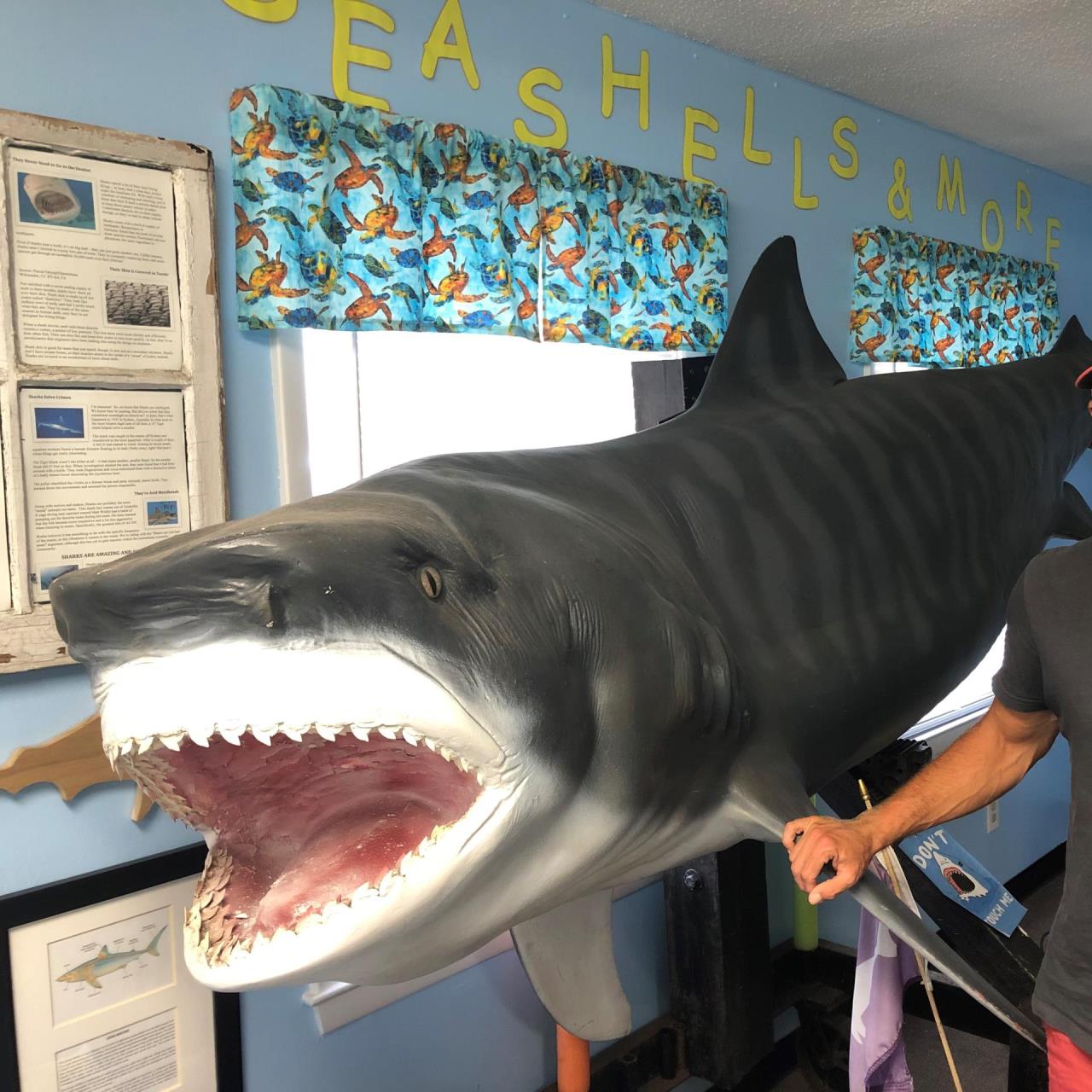
YP JAWS: In 1966, Charlotte native Walter Maxwell was fishing from the Oak Island Pier (then known as the Yaupon Fishing Pier), when he reeled in the largest Tiger Shark ever caught in North Carolina. Weighing in at 1,150lbs, a replica of the shark, dubbed "YP Jaws" now sits on display in the Town's Ocean Education Center.
Should I be worried?
Generally speaking, no. While it is common to see sharks near the shoreline areas, their interest is rarely in humans. Media outlets may sensationalize a shark bite by referring to it as an "attack," but the truth is that most bites are simply a case of "mistaken identity" where the shark mistakes a swimmer or surfer for more desired prey. However, even with only a single "test" bite, even smaller sharks can pose a serious risk. It's best to avoid them if possible, and exit the water if there are multiple sightings in a single area.
TO LEARN MORE about the many shark species which call Oak Island home, just visit the Oak Island Ocean Education Center, located at 4700 E Oak Island Drive, across from the Town Hall.
Purple Beach Warning Flags
Please Note: As with any other beach in most oceans worldwide there are always sharks, jellyfish, and other potentially dangerous marine life the water. The rare possibility of encountering one of these must be accepted before swimming in the ocean.
In most cases, sightings of a shark or other marine life will not trigger a purple Beach Warning Flag(JPG, 200KB). Only when they have been observed in an unusually high concentration, very close to shore, or other unique circumstances will a purple flag be raised.
Before venturing out into the water, be sure to check the current Beach Warning Flag condition at www.OakIslandNC.gov/SAFETY.
Foxes
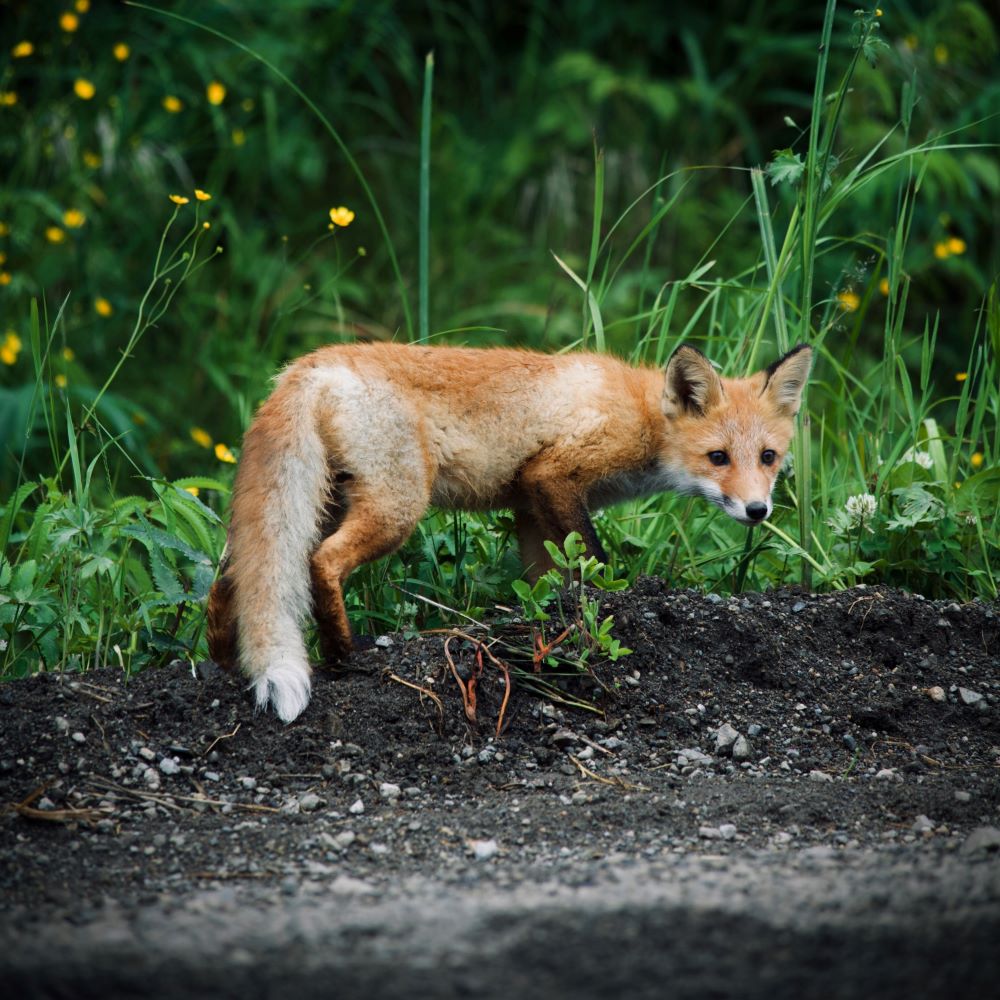 Red foxes and gray foxes are common in North Carolina today, but the gray fox is the state's only native species. Red foxes were brought here from Europe by fox hunters in the early 1700s. In fact, before towns began to be established on Oak Island, the area served as a popular fox hunting preserve.
In the early morning or late evening, it is not uncommon to see a fox in the more wooded sections of Town, but occasionally even on the beach as well. During the springtime, it's even common to see a mother fox with a young "kit" (this is what baby foxes are called) or an entire litter following behind.
In most cases, foxes have adapted to living comfortably with their human neighbors, but that doesn't mean they are friendly or approachable! While they are beautiful to look at, they are still wild animals and should be admired from a respectful distance.
"I Hear Children Screaming"
If you've ever been awake on Oak Island in the dead of night, and heard what sounded like the unnerving screams of a small child ... well don't worry, it's (probably) not a ghost! Most likely what you've heard is either a female fox (or 'vixen') calling for a mate, or a male (or 'dog') fox defending his territory. These screams are often followed by the barking of neighborhood dogs, fighting their generational instincts to hunt these former prey.
Should I be worried?
Generally speaking, no, foxes are usually timid around humans and prefer to avoid them if possible. As humans, it is our responsibility to help keep it that way. Please do not try to feed, handle, touch, or interact with wild foxes in any way!
Foxes are possible carriers the Rabies Virus, although not as common as other wild animals (only about 7% of cases reported to the Centers for Disease Control and Prevention). Despite some common belief, it is not possible to tell if an animal has rabies just by looking at it. That is just one more reason to admire them respectfully from a distance. If you encounter a fox acting in a strange or overly aggressive manner, call 9-1-1.
To learn more about foxes and the many other animals which call Oak Island home, just visit the Oak Island Nature Center, located at 5202 E Yacht Drive, next to the Malcom Register Park.
Deer
 Deer are commonly seen in the towns of Oak island and neighboring Caswell Beach. While they usually live in the wooded and swamp areas on the mainland, deer are skillful swimmers who are often observed swimming across the Intracoastal Waterway (ICW),
If boating or sitting on the banks of the ICW, it's quite possible to see a small herd of deer swimming to either escape predators or find food.
Graceful, elegant, and nimble, deer are beautiful to see in their element. However, as with any other wild animal on this list, they should be observed respectfully and from a distance.
Should I be worried?
Generally speaking, no, deer are usually cautious around humans and try to avoid them if possible. As humans, it is our responsibility to help keep it that way. Please do not try to feed, handle, touch, or interact with wild deer in any way!
In autumn, deer enter their mating season (or “rut”), which peaks around early October in coastal areas such as Oak Island. Around this time, a "buck" (male deer) will rub its antlers on trees and limbs, and make scrapes or depressions in the ground, while depositing scent as a form of communicating with other deer. Although not usually directed at humans, bucks will show aggressive behavior as a warning to other males, which humans and their pets can sometimes get caught in.
That is just one more reason to admire them respectfully from a distance, and if you encounter a deer acting in a strange or overly aggressive manner, call 9-1-1.
To learn more about deer and the many other animals which call Oak Island home, just visit the Oak Island Nature Center, located at 5202 E Yacht Drive, next to the Malcom Register Park.
Snakes
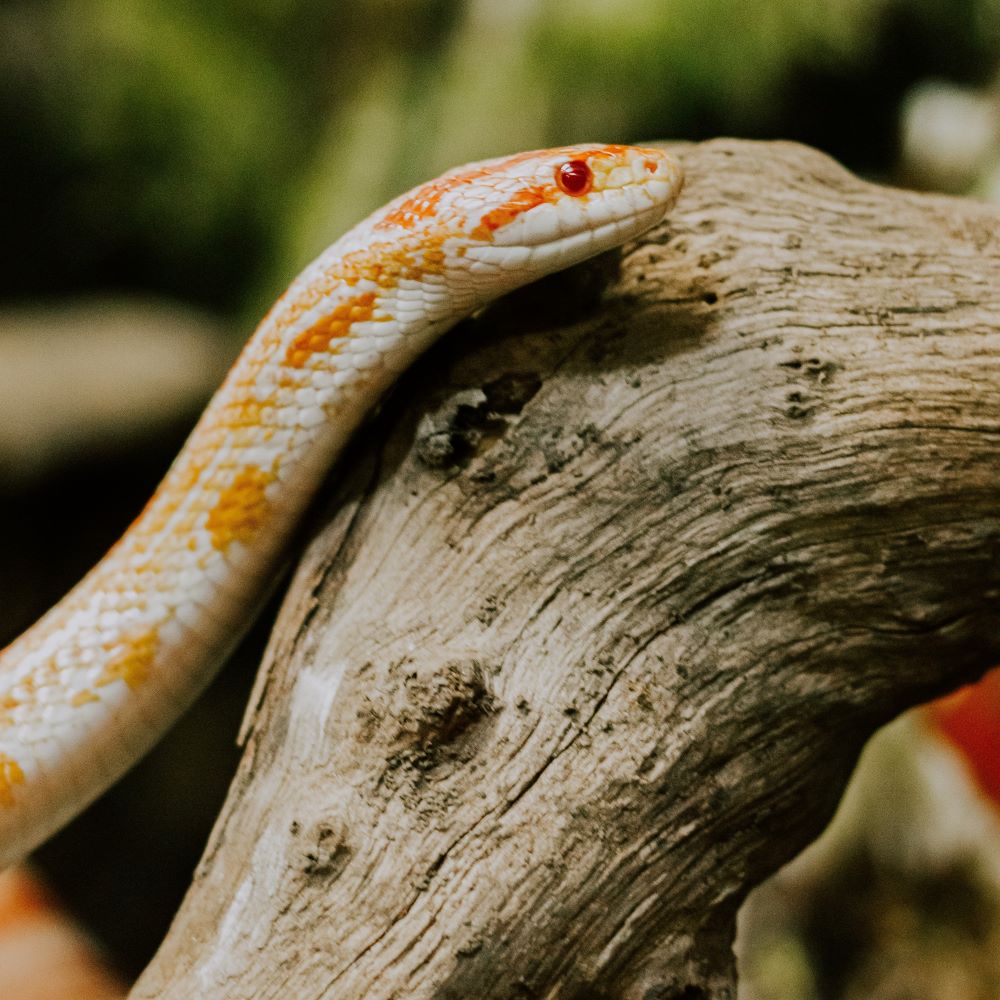 In a coastal region where woodlands, swamps, salt marshes, and the ocean all meet, it is a prime habitat for several types of snakes; both venomous and non-venomous.
Although not a complete list, some species most commonly seen in Oak Island include the Brown Watersnake, the Common Garter Snake, Copperheads, and Corn Snakes.
Is it dangerous?
When talking about snakes in their natural habitat, the danger humans pose to them far exceeds their threat to humans. While many use the phrase "the only good snake is a dead snake," that couldn't be farther from the truth. All snakes serve a valuable purpose in preserving the balance of our eco-system, as they help with the population control of rodents, bugs ... and even other snakes!
Like most of the animals found on this list, snakes are just looking for their next meal or a secure place to stay. With very rare exceptions, they will only attack or bite humans or their pets if they feel threatened or agitated. If you see a snake in a yard or on the street, keep a respectful distance and let it continue on.
If a snake is found in a house or other potentially dangerous location, please contact a removal expert first! Do not try to handle, feed, trap, or interact with a snake in any way, regardless of your own perceived skill level.
To learn more about the many species of snakes which call Oak Island home, just visit the Oak Island Nature Center, located at 5202 E Yacht Drive, next to the Malcom Register Park.
Birds
 When most people visit the coast, they think of the wildlife found beneath the waves. Few visitors notice the entire eco-system right above their heads! On Oak Island, where woodlands, swamps, salt marshes, and the ocean all meet, there is an equally diverse population of all five (5) of the main types of birds, including:
- Songbirds (blue jays, cardinals, hummingbirds, grackles)
- Birds of Prey (hawks, eagles, ospreys, and owls)
- Sea Birds (seagulls, pelicans, petrels, and cormorants)
- Water Birds (ducks and geese)
- Wading Birds (egrets, herons, ibis, sandpipers)
By far, humans pose more of a threat to birds than birds do humans. As humans, it is our responsibility to help minimize our negative impacts as much as possible. Please do not try to feed, handle, touch, or interact with wild birds in any way!
See a bird in need? Oak Island is home to the Sea Biscuit Wildlife Shelter, a private, non-profit wild bird rehabilitation organization. Founded in 2007, the Shelter provides medical treatment for wild birds that are injured, sick, or orphaned. If you notice an injured or abandoned bird in need, contact the Sea Biscuit Wildlife Shelter by calling 910-294-2555, or through the contact information on the Sea Biscuit Wildlife Shelter website.
To learn more about the many species of birds which call Oak Island home, just visit the Oak Island Nature Center, located at 5202 E Yacht Drive, next to the Malcom Register Park.
As noted in the entries above, please do not try to approach, feed, handle, capture, or interact with these animals in any way.
Please Note: The Town of Oak Island will not remove any animal simply for being present in a given area; wildlife are removed only if they pose a legitimate and immediate threat to humans.
In most cases, their mere presence is not considered an immediate threat (yes, this even includes alligators, snakes, and sharks).
Most wildlife can be safely observed from a respectable distance. However, while beautiful to look at, these are still wild animals and could attack, injure, or even kill a human if they feel threatened.
When to Call for Assistance
The Town of Oak Island does not directly provide wildlife response, but defers to the Animal Protective Services (APS) division of the Brunswick County Sheriff's Office.
If a wild animal is showing unusual signs of aggression, disease (such as rabies), or other actions that appear threatening, please do not contact the Oak Island Police Department directly, instead call 9-1-1 so that APS can be appropriately dispatched.
Purple Flag Notices
Please Note: As with any other beach in most oceans worldwide there are always Man O' War, sharks, jellyfish, and other potentially dangerous marine life the water. The rare possibility of encountering one of these must be accepted before swimming in the ocean.
In most cases, single sightings will not trigger a purple Beach Warning Flag(JPG, 200KB). Only when they have been observed in an unusually high concentration, very close to shore, or other unique circumstances will a purple flag be raised.
Before venturing out into the water, be sure to check the current Beach Warning Flag condition at www.OakIslandNC.gov/SAFETY.
Learn More
The Oak Island Nature Center provides information on the many birds, mammals, amphibians, and reptiles that call Oak Island home. The Center is located at 5202 E Yacht Drive, next to the Malcom Register Park. For hours of operation and center updates, visit www.OakIslandNC.gov/NATURE.
The Oak Island Ocean Education Center provides information on the many species of shark, fish, dolphin, and sea turtles which frequent Oak Island's waters. The Center is located at 4700 E Oak Island Drive, across from the Town Hall. For hours of operation and center updates, visit www.OakIslandNC.gov/OCEAN.